

Facelift Surgery in London
From a scarless endoscopic ponytail lift to a full deep plane lift of the face and neck, our facelift surgery is delivered through the Snatched Lift™, Professor Ali Ghanem's signature technique, matched to your anatomy, stage of ageing, and the result you want.
Book a Consultation
Facelift Surgery Overview
A facelift, or rhytidectomy, is one of the most studied and refined procedures in aesthetic surgery. It repositions deeper facial tissue, tightens the underlying support layer, and removes excess skin to restore a smoother, more lifted appearance to the lower face and neck. Modern techniques work at deeper anatomical levels than the skin-pulling lifts of the past, which is why results today look structural and natural rather than tight or done.
At The Ghanem Clinic, facelift surgery is delivered through the Snatched Lift™, Professor Ali Ghanem's signature technique offered across four tiers, from a scarless endoscopic ponytail lift to a full deep plane lift of the face and neck. Every facelift is chosen to suit your anatomy rather than the other way around, with the technique, depth of dissection, and incision pattern tailored to the result you want.
Choosing the Right Facelift
Selecting the right facelift depends on the stage of ageing, the area of concern, your tolerance for downtime, and your long-term goals. A patient in their late 30s with early jowling needs a very different procedure to someone in their 60s with significant neck laxity and deep folds. During your consultation, Professor Ghanem carries out a detailed facial assessment and confirms which Snatched Lift™ tier delivers a balanced, natural result without altering the face you recognise.
Facelift vs. Non-Surgical Lifting
Unlike fillers, threads, or non-surgical lifting devices, a facelift repositions deeper facial tissue rather than tightening skin or adding volume alone. This produces a structural, long-lasting result. Non-surgical treatments have an important role in extending and refining facelift results, but they cannot replace the underlying lift when significant tissue descent has occurred. For non-surgical alternatives, explore our advanced skin rejuvenation options.
London's Best Facelift: The Snatched Lift™ System
Professor Ali Ghanem's Snatched Lift™ spans four tiers across three procedures, each matched to a different stage of facial ageing. Your consultation determines which is right for you.

The Snatched Lift™ Facelift
Professor Ali Ghanem's signature facelift technique, delivered across four tiers. From a scarless endoscopic ponytail lift for early ageing to a full deep plane lift of the face and neck, the Snatched Lift™ is matched precisely to your face. One technique, four tiers, performed only by Professor Ghanem.
Tier 1Endoscopic lift of the upper face and midface. For early ageing in the 30s to early 40s.
Tier 2Adds a SMAS lift of the lower face and neck. For the 40s to early 50s.
Tier 3A deep plane lower facelift, without the anterior neck. For the 50s.
Tier 4A full deep plane lift of the face and anterior neck. For the late 50s to 60s.

Endoscopic Facelift & Ponytail Lift
Tiers 1 and 2 of the Snatched Lift™, and the UK's first true endoscopic facelift, exclusive to The Ghanem Clinic. Also known as a ponytail lift, it repositions deep tissue in the midface, temples and brow through incisions hidden in the hairline, for that elevated, pulled-back look without the extent of traditional surgery.
Tier 1Upper face and midface lifted endoscopically, lower face treated non-incisionally. For the 30s to early 40s.
Tier 2Adds a SMAS-level lift of the lower face and neck. For the 40s to early 50s.

Deep Plane Facelift
Tiers 3 and 4 of the Snatched Lift™. Works beneath the SMAS layer, releasing the retaining ligaments to reposition deep tissue as a single unit. Delivers more structural lift, longer-lasting results, and no pulled appearance. Few surgeons in the UK perform a true deep plane facelift.
Tier 3Endoscopic upper face plus a deep plane lower facelift, without the anterior neck. For the 50s.
Tier 4The full deep plane technique through the face and anterior neck. For the late 50s to 60s.
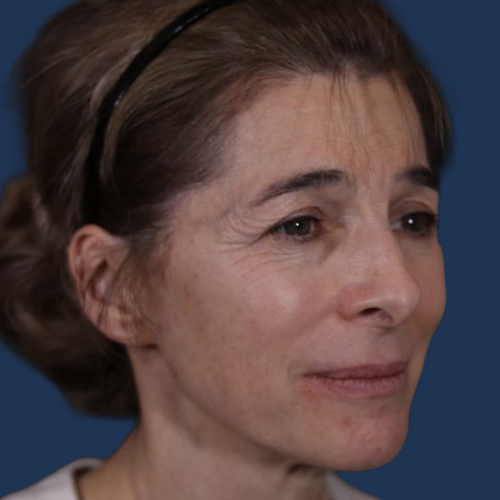
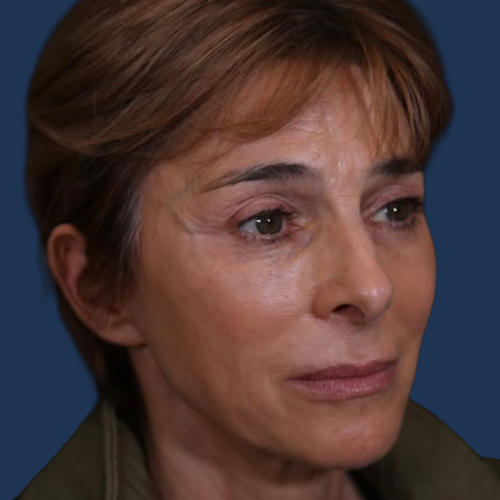
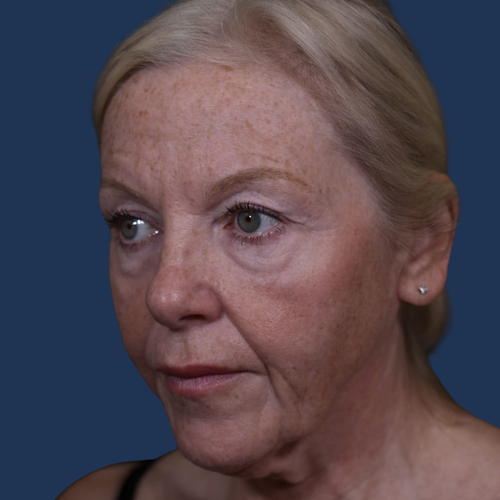
Facelift Before & After
Real patients, real results. Drag the slider to compare before and after.
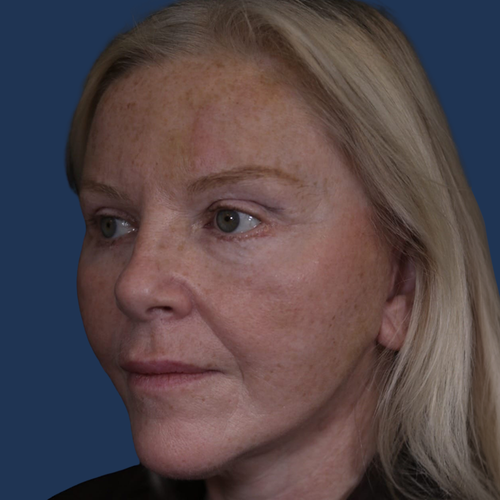
Your Facelift Journey
Initial Consultation
Your journey begins with a private consultation at our Wimpole Street clinic. Professor Ghanem carries out a detailed facial assessment, reviews your medical history, and discusses your goals in depth to confirm the most appropriate Snatched Lift™ tier for you.
Surgical Planning
A personalised surgical plan is developed using facial mapping and anatomical analysis. Incision placement, depth of dissection, anaesthesia, and any combined procedures are agreed in advance so that you know exactly what to expect.
Pre-Operative Preparation
You receive tailored guidance on medications, skincare, and lifestyle adjustments to prepare you for surgery. Our team supports you through every step of preparation to ensure a calm, confident journey to your procedure date.
The Procedure
Your facelift is carried out under sedation or general anaesthesia, depending on the tier. Tissue is repositioned at the appropriate anatomical depth, excess skin is gently redraped, and incisions are closed with meticulous attention to scar concealment.
Recovery and Aftercare
Recovery is supported by a structured aftercare programme, including follow-up reviews, tailored guidance on activity, and access to our team for any questions. Most patients return to light activities within one to two weeks, with full results developing over the months that follow.
What to Expect
Facelift surgery is a defined journey. The detail of what happens before, during, and after depends on the tier chosen, but the principles of preparation, care, and recovery remain consistent across every facelift we perform.
Preparation
You receive a comprehensive pre-operative assessment, personalised guidance on medications and lifestyle, and a clear explanation of the days leading up to your procedure. Skin, sleep, nutrition, and emotional readiness are all considered.
The Procedure
Your facelift is performed under appropriate anaesthesia in a fully accredited surgical setting. Incisions are placed within natural creases and the hairline, deeper tissue is repositioned, and the skin is redraped without tension.
Recovery and Results
Swelling, bruising, and tightness are normal in the first one to two weeks. Most patients return to light activity within seven to ten days. Results refine over three to six months as residual swelling settles and the lift fully integrates.

Professor Ali Ghanem
Professor Ali Ghanem is the UK's only Professor of Aesthetic Medicine and a Fellow of the Royal College of Surgeons. He leads every facelift personally. Your consultation is with him, your surgery is performed by him, and your recovery is overseen by him and his team.
GMC No. 5200491 · Specialist Register since 2018
Frequently Asked Questions
Which facelift is right for me?
What is the difference between an endoscopic and a deep plane facelift?
How long do facelift results last?
What is the recovery time after facelift surgery?
Can a facelift be combined with other procedures?
At what age should I consider a facelift?
Explore More


The Right Facelift, Tailored to You
Book a private consultation to discuss which Snatched Lift™ tier suits your anatomy, your goals, and the result you want, without altering the face you recognise.
Book a Consultation