

Considering facial surgery?
Maybe it's the jowls you notice in photos, or a neck that doesn't match how you feel. Here are the questions people ask us most about facial surgery.
Am I too young, or too old, for a facelift?
There's no right age.
So it comes down to how your face has changed and what you'd like.
People in their late 30s and 40s often come to us for early changes around the brow, temples and cheeks, which a lighter endoscopic approach can treat.
In their 50s, 60s and beyond, most need more structural work through the lower face and neck.
What can surgery do that injectables and devices can't?
Non-surgical treatments
- Non-surgical treatments are good at improving skin quality and adding a little volume.
- They can't lift tissue that has dropped or tighten a loose neck, and when filler is used to chase sagging, faces can start to look heavy and, over time, less like themselves.
Our advice
- If surgery will help, we'll tell you.
- If a non-surgical plan suits you better for now, we'll tell you that too.
What are my options?
Professor Ghanem's signature facelift, the Snatched Lift™, comes in 4 tiers.
Tiers 1 and 2 are endoscopic: they lift the brow, temples and midface through small incisions in the hairline, and Tier 2 adds a lift of the lower face and neck. Tiers 3 and 4 use the deep plane technique for the lower face (Tier 4 includes the full neck).
Tier 1
Brow, temples and midface, through small incisions in the hairline
Tier 2
Adds a lift of the lower face and neck
Tier 3
Deep plane technique for the lower face
Tier 4
Deep plane, including the full neck
Brow lift, neck lift, eyelid surgery and fat transfer can all be part of your plan, and your tier is confirmed at consultation.
What's the difference between a mini, endoscopic and deep plane facelift?
Mini facelift
A mini facelift uses shorter incisions for a lighter lift, mostly of the lower face, and suits early changes.
Early changesEndoscopic facelift
An endoscopic facelift uses a small camera through incisions in the hairline to lift the brow, temples and midface, with no visible scars.
Brow, temples, midfaceDeep plane facelift
A deep plane facelift works beneath the muscle layer: it releases the ligaments that hold tissue down, so the face can be repositioned as one unit. It's designed for established jowls and the neck, and its results last longest.
Jowls and the neckYou may also have seen one-stitch or two-stitch lifts. These are usually limited, short-incision lifts; ask which layer of your face the technique actually reaches.
Will I still look like myself?
Yes. The Snatched Lift™ lifts the deeper tissues of the face, so your expression stays your own.
Some patients want a gentle refresh and some want a bigger change; either way, the plan works with your features and proportions.
How do I get rid of jowls or a 'turkey neck'?
Early jowling
Early jowling can be treated with a lift of the lower face.
Established jowls and a loose neck
Established jowls and a loose neck, especially with visible bands, need the deep plane technique, sometimes with a platysmaplasty to tighten the neck muscle.
Non-surgical treatments
Non-surgical treatments can soften the look a little, but they can't lift what has dropped.
What is recovery like?
Swelling and bruising peak around day 3. Most people are back to social life after 1 to 2 weeks for the endoscopic tiers and 2 to 3 weeks for the deep plane tiers, and the result keeps refining for around 3 to 6 months.
Swelling and bruising peak
Back to social life, endoscopic tiers
Back to social life, deep plane tiers
The result keeps refining
Will there be scars?
Endoscopic
Endoscopic incisions sit inside the hairline, so there's nothing to see.
Deep plane
Deep plane incisions follow the hairline and the natural contours of the ear, and fade over the first year.
How long does a facelift last?
Typically 5 to 8 years for the endoscopic tiers and 8 to 10 for the deep plane tiers. Your face keeps ageing, just from a younger starting point.
How do I choose a facelift surgeon?
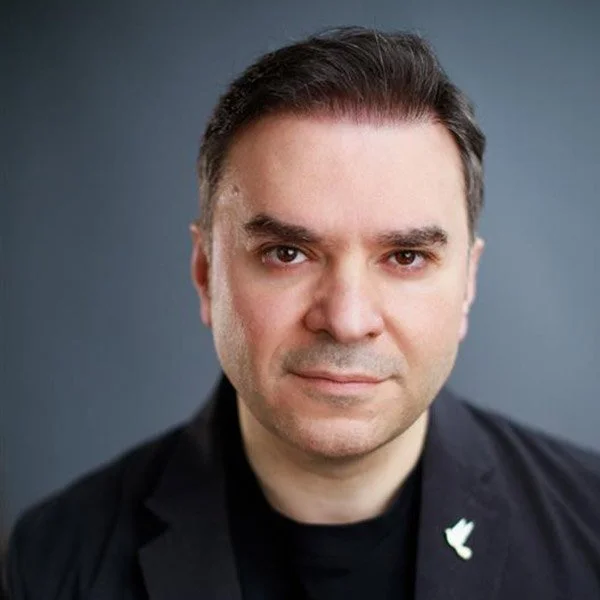
Professor Ali GhanemCheck the GMC Specialist Register, ask how many facelifts your surgeon does, and look at real before-and-afters taken in the same light.
Professor Ghanem learned these techniques from the surgeons who developed them (he trained in the deep plane facelift with its American pioneer, Sam Hamra) and now teaches them to other surgeons.
How much does a facelift cost?
Our facelift fees are in line with other leading Harley Street surgeons. As a guide, a full facelift is around £35,000, depending on the tier and anything combined with it. You'll get a full written quotation after your consultation, and financing options are available.
What happens at my consultation?
Professor Ghanem asks what you'd like to change and what you'd like to keep, examines your face, takes photographs and gives you his honest view, including whether surgery is right for you yet. You leave with a written plan, and you can come back as often as you need before deciding.
4 Upper Wimpole Street, London W1G 6LF