
Can a Facelift Get Rid of Wrinkles? What Surgery Can and Cannot Correct
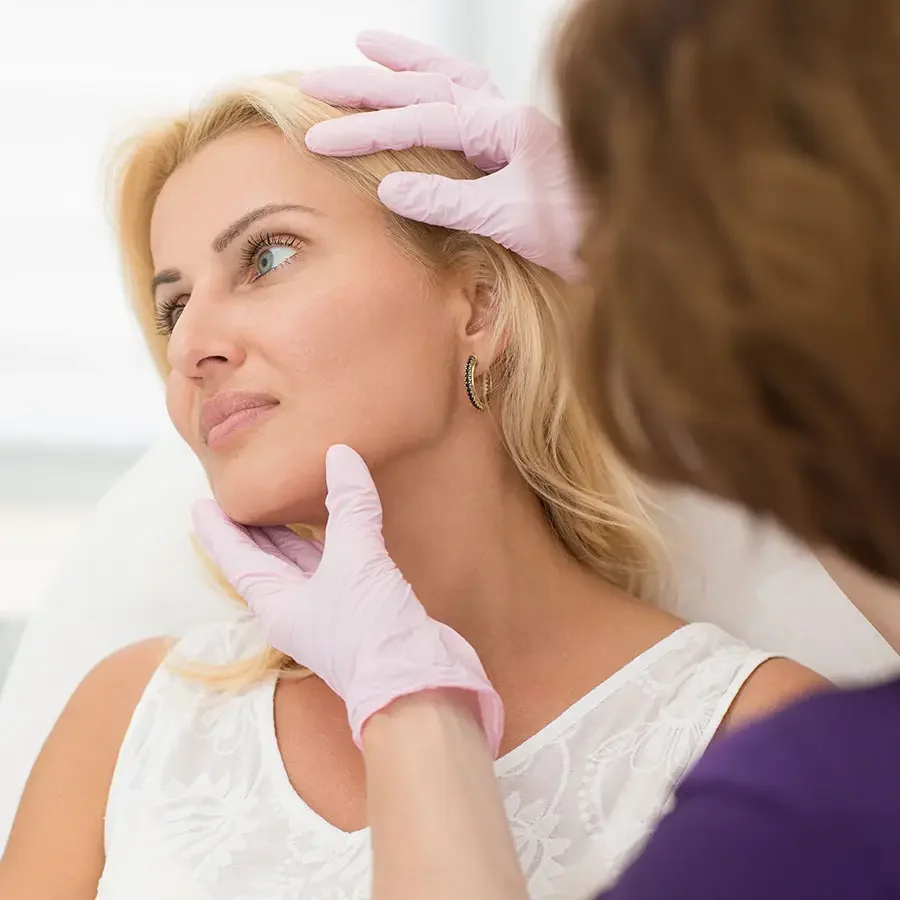
Quick Answer: A facelift is not primarily a wrinkle treatment. It lifts and repositions descended facial tissue, which may soften some folds, but it does not directly treat expression lines or fine surface wrinkles. Getting rid of wrinkles starts with understanding whether the concern is structural, muscle-driven, volume-related or textural.
Patients arriving for facelift consultations often list wrinkles as their main concern. They then leave surprised to learn that a facelift would not have solved the problem they came in with. The confusion is understandable because both are called "anti-ageing," but they address different anatomical concerns. A facelift restructures. Wrinkle treatments work on the skin and the muscles beneath it. Choosing the wrong procedure produces the wrong result, which is why understanding what you actually want to correct is the first useful step. For an overview of surgical facial rejuvenation, see our page on facial rejuvenation and contouring.
What a Facelift Does, and What It Does Not
A facelift is structural surgery. It repositions the deeper tissue of the face that has descended with age, tightens the supporting layers, and removes excess skin where the envelope has stretched. The result is a firmer jawline, restored midface volume, a smoother neck and improved facial contour.
Surface wrinkles remain. Forehead lines caused by raising the eyebrows, crow's feet at the corners of the eyes and fine lines around the mouth are all still there after surgery. The skin may look more even in some areas because the underlying support has been repositioned, but the lines etched into the skin surface are a separate problem with separate solutions.
What a Facelift Delivers That Non-Surgical Treatment Cannot
For the right patient, a facelift produces changes that non-surgical treatment cannot replicate. When tissue has genuinely descended, no injectable can lift it back into position, and no resurfacing treatment can restore the underlying support that has weakened over time. Surgical lifting allows the deeper facial tissues to be repositioned directly.
A well-executed facelift restores jawline definition, brings back midface volume, tightens the neck and produces a natural, refreshed appearance without altering the features that make a face recognisable. Because it addresses the underlying structure rather than the skin surface alone, a facelift can produce a substantial and enduring change in facial contour while preserving natural expression.
Can a Facelift Make Some Wrinkles Look Better?
In some cases, yes. When a crease or fold is being exaggerated by descended tissue, repositioning that tissue can soften its appearance. Nasolabial folds may become more pronounced as the midface descends, for example. Restoring the position of the cheek can reduce some of that heaviness, although it may not eliminate the fold completely.
What a facelift does not do is resurface the skin or stop the muscle activity responsible for expression lines. Wrinkles primarily caused by muscle movement or changes in skin quality are not directly treated by facelift surgery and may still require targeted treatment.
Three Common Causes of Facial Lines and Wrinkles
Facial lines fall into three broad categories with different underlying causes and different appropriate treatments.
Muscle-Driven Lines
Expression lines are caused by repeated muscle movement. Forehead lines, frown lines and crow's feet are all muscle-driven. They appear during expression and, with enough repetition over enough years, become visible at rest.
Precision anti-wrinkle injections address these lines by softening expression while preserving natural movement. A facelift has no effect because the cause is muscle activity, not tissue descent.
Volume and Structural Change
Some lines and folds are the visible surface of deeper changes: lost fat pads, thinning of underlying support, or descent of tissue that used to sit higher. Nasolabial folds, marionette lines and hollowing across the cheeks often sit here.
Where volume loss contributes to a fold, carefully placed dermal filler may be considered. Where the underlying issue is tissue descent, structural correction through a facelift can address the cause. Where the skin biology itself has changed, skin quality injectables such as Profhilo or polynucleotides may be more appropriate. A consultation identifies which mechanism is producing each line and matches the treatment to it.
Skin Texture and Fine Lines
Textural lines and crepiness come from thinning skin, collagen loss, dehydration and sun damage. Under-eye crepiness, perioral lines and the surface texture of the décolletage typically sit here. Skin resurfacing and skin quality injectables are the appropriate treatments. A facelift has no effect on skin texture.
Why the Category Matters
Most patients present with a mixture: forehead lines (muscle-driven) plus midface descent (structural) plus under-eye crepiness (textural) is a common combination. Treating one and ignoring the others is what produces the incomplete outcomes patients describe when they say their face still looks tired after treatment. This is the clinical reasoning behind combined treatment plans, where structural, muscle-driven and textural concerns are each matched to the treatment appropriate for them.
Why Wrinkles Can Remain After a Good Facelift
So, can a facelift get rid of wrinkles? It can soften certain folds associated with tissue descent, but it should not be considered a direct treatment for expression lines or fine surface wrinkles. Residual wrinkles after facelift surgery do not indicate a poor result. Surgery and skin treatment have different endpoints. A facelift restores the underlying structure of the face. Anti-wrinkle injections address the muscles that produce expression lines. Resurfacing and skin quality treatments improve the surface itself.
A patient who has had an excellent facelift may still notice forehead lines, crow's feet or fine crepiness because those concerns are anatomically distinct from what surgery corrected. The complete result usually comes from combining the operation with treatments that target muscle activity, skin quality and surface texture.
How The Ghanem Clinic Approaches Wrinkles and Ageing
The Ghanem Clinic assesses facial ageing across all three categories rather than starting from a fixed procedure. Structure, volume-related change and skin texture are examined separately, and the treatment plan is built around what each layer requires.
Signature approaches include The Snatched Lift, the UK's first endoscopic facelift, led by Professor Ali Ghanem, the UK's only Professor of Aesthetic Medicine and Fellow of the Royal College of Surgeons. Consultation establishes which combination of surgical and non-surgical treatments is appropriate for your anatomy, rather than assuming that the procedure you arrived asking about is necessarily the right one.
Frequently Asked Questions
Will a facelift get rid of forehead wrinkles?
No. Forehead wrinkles are muscle-driven expression lines. A facelift does not directly treat the repetitive muscle activity responsible for them. Anti-wrinkle injections are the appropriate treatment.
Will a facelift get rid of wrinkles around the eyes?
Not directly. Crow's feet are muscle-driven, and fine lines under the eyes are textural. Neither responds to a facelift. Anti-wrinkle injections and skin quality treatments address them separately.
Can anti-wrinkle injections replace a facelift?
No. Injections soften muscle-driven expression lines. A facelift repositions descended tissue. They address different anatomy and are not substitutes for each other, though both are often used together as part of a longer-term plan.
What is the best treatment for getting rid of wrinkles?
There is no single answer because wrinkles have different causes. Muscle-driven lines respond to anti-wrinkle injections. Volume-related lines may respond to filler, skin quality treatments or, where descent is contributing, structural correction. Textural lines respond to resurfacing and skin quality treatments. The right plan depends on which of these apply to your face.
At what age should I consider a facelift versus non-surgical treatment?
Age is not the deciding factor. Anatomy is. Patients whose main concerns are muscle-driven lines and skin quality are usually better served by non-surgical treatment regardless of age. Patients with meaningful tissue descent may benefit from surgical repositioning regardless of age. A consultation identifies which concerns are structural and which are surface, and the plan follows from that.